
On-Site Labor
CRI inside your building. Balers, sort lines, dock moves, custom programs that keep your recycling streams clean and your floor running.
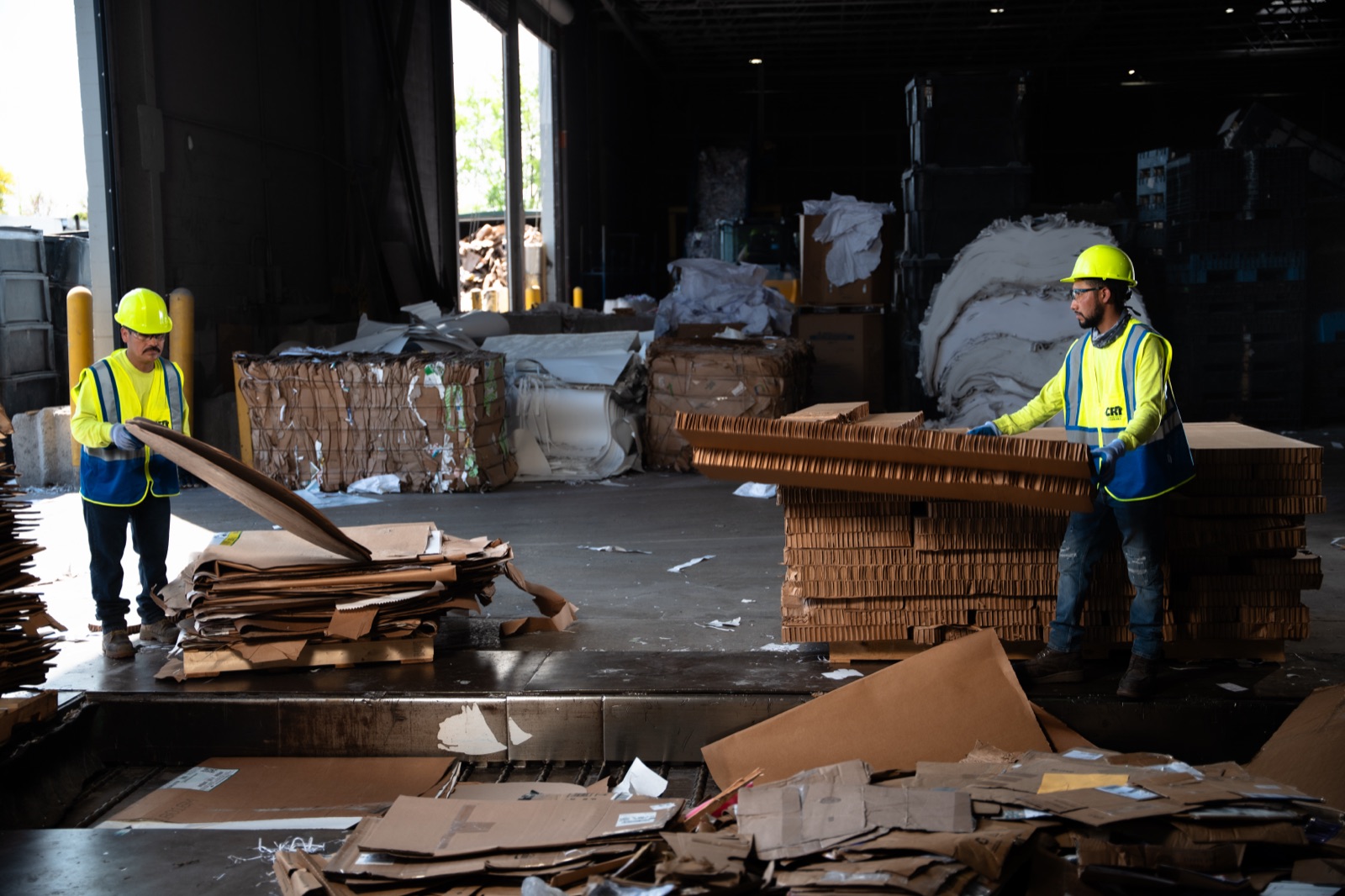
Recycling That Runs at Production Speed
When recycling volume gets big, the bottleneck stops being the trailer outside, it becomes everything between the production line and the dock. Bales sit. Gaylords pile up. Grades cross-contaminate. Operators run balers off the side of their desk and grade discipline drops.
CRI puts trained labor inside your building to own that link. Crews operate balers and compactors, run sort lines, swap trailers, walk the plant capturing recyclables at the source, and manage dock orchestration around your shipping windows. The result: cleaner grades, fewer dumpster diversions, faster turns, and a partner accountable for the whole stream from generator to mill.
Programs are custom-built. Some clients run a single CRI operator on a baler. Others embed full crews on multiple shifts. We scope to your throughput, your safety program, and your operating model.
On-Site Programs
From a single baler operator to a full multi-shift recycling crew, CRI sizes the program to match your operation.
Baler & Compactor Operation
Trained crew running your equipment around the clock so cardboard, plastic, and paper move at production speed
Sort Lines
Manual sort and quality-control labor that keeps grades clean and rebate-eligible at high-volume DCs and MRFs
Dock & Container Moves
Trailer swaps, gaylord rotations, and dock orchestration coordinated with your shipping windows
Floor Sweeps & Stream Capture
Crews that walk the plant capturing recyclables at the source so they never end up in the dumpster
Project & Cleanout Crews
Surge labor for line moves, building cleanouts, racking changes, and one-off recycling projects
Custom Programs
Joint-engineered staffing models for tenants of distribution networks, manufacturers, and contract packagers
On-Site Labor Across 45 States
CRI deploys on-site labor at customer facilities in 45 US states and 4 Canadian provinces. The page below is a dedicated local resource for our home market.
On-Site Labor FAQ
Common questions about embedded CRI labor inside your facility.
When does on-site labor make sense?+
Are CRI crews CRI employees or contractors?+
What about safety, training, and on-site compliance?+
Do you handle the equipment too?+
How is pricing structured?+
Want to know what your waste is worth?
Call us or request a free assessment. No contracts. No obligation.